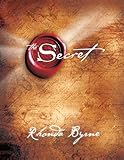
Rhonda Byrne presents the Law of Attraction — the idea that positive thinking and focused desire literally attract corresponding circumstances from the universe — as the secret to achieving health, wealth, and happiness.
The first book in Ryan Holiday's Stoic Virtues series explores what courage looks like across history and philosophy. Using stories of figures who chose courage over comfort — Churchill, Florence Nightingale, Frederick Douglass — Holiday makes the ancient Stoic case for acting despite fear rather than waiting for it to pass.
The second Stoic Virtues book focuses on temperance — the ability to govern the self, to choose the harder right over the easier wrong. Holiday examines Queen Elizabeth II, Lou Gehrig, and Antoninus Pius to argue that self-discipline is not deprivation but the highest form of freedom.
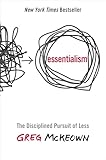
Greg McKeown makes the case for a radical new discipline: the pursuit of less, but better. Essentialism is the art of discerning what is essential and eliminating everything else — so you can make your highest possible contribution.
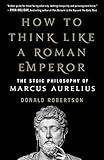
Cognitive behavioral therapist Donald Robertson weaves together Marcus Aurelius's biography with the Stoic philosophy he practiced, showing how ancient techniques map onto modern psychological methods.
Activist and poet Sonya Renee Taylor argues that radical self-love — the unconditional acceptance of your body exactly as it is — is not a personal practice but a political act that dismantles systems of oppression.
Haidt examines ten great ideas about happiness drawn from ancient philosophy and religion, testing each against modern psychology research to determine what the ancients got right, what they got wrong, and what the science adds.
Buddhist teacher Pema Chödrön offers compassionate teachings on how to work with fear, loss, and groundlessness — arguing that these experiences, properly met, are paths to awakening rather than obstacles to it.
A brief, luminous 1903 essay arguing that the mind is the garden of human life — that thought determines character, achievement, health, and circumstances.
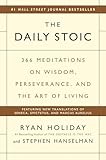
Ryan Holiday and Stephen Hanselman profile twenty-six Stoic philosophers — from Zeno of Citium to Marcus Aurelius — examining how each lived, and how each often fell short of the principles they taught. The book treats the Stoics as flawed human beings rather than marble icons, which makes their philosophy more honest and more usable.
Byron Katie presents The Work — a four-question inquiry method that dismantles stressful thoughts and reveals the peace that remains when we stop arguing with reality.
366 days of Stoic philosophy — a meditation for each day of the year, drawn from Marcus Aurelius, Epictetus, and Seneca, with commentary by Ryan Holiday and Stephen Hanselman.
Eric Ries argues that startups can shorten their product development cycles and discover what customers actually want through validated learning, scientific experimentation, and iterative product releases. The Lean Startup changed how the world builds companies.
Steven Pressfield names the force that stops creative work — Resistance — and provides a philosophical framework for overcoming it through professional discipline.
A guide to understanding and breaking through the mental blocks that keep you from creating the income you deserve, combining practical advice with motivational coaching.
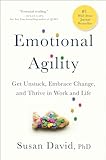
Harvard Medical School psychologist Susan David presents a framework for moving through difficult emotions with flexibility, clarity, and self-compassion rather than suppression or rumination.
Cialdini's follow-up to Influence reveals that the most powerful moment in persuasion is the moment before the message — what you direct attention to immediately before a request shapes what people are receptive to.
The third volume in Ryan Holiday's Stoic Virtues series examines justice — the most outward-facing of the classical virtues, governing how we treat others, fulfil our obligations, and act ethically under pressure. It is the most philosophically demanding book in the trilogy and the most difficult virtue to practice.
Newport argues against the popular advice to follow your passion — instead proposing that you become excellent at rare and valuable skills first, then leverage that excellence for the work you want.
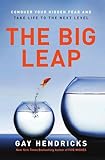
Gay Hendricks identifies the hidden self-sabotage patterns that cap our success and happiness, and offers a practical path to living and working in our Zone of Genius.
David Schwartz argues that the size of your success is determined by the size of your belief — and provides practical techniques for cultivating bigger thinking in every area of life.
Drawing on Stoic philosophy and historical examples, Ryan Holiday argues that the obstacles we face are not impediments to success but the very material from which it is made.
Daniel Pink uses surveys, psychological research, and interviews to argue that regret — typically treated as a negative emotion to be minimised — is actually one of our most useful and clarifying feelings, and that engaging with regret honestly can improve decision-making, performance, and sense of meaning.