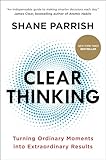
Farnam Street founder Shane Parrish distills the most important principles for making better decisions, identifying and overcoming the defaults that undermine clear thinking.
Research professor Brené Brown argues that vulnerability — the willingness to be seen in all our uncertainty and imperfection — is not weakness but the foundation of courage, connection, and creativity.
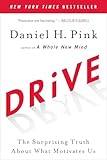
Daniel Pink argues that the science of human motivation has been ignored by business, which relies on carrot-and-stick incentives that actually undermine performance for complex work.
A practical guide to eliminating anxiety and worry through tested principles drawn from thousands of case studies, historical examples, and Carnegie's own experience.
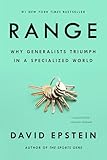
David Epstein argues that in a complex world, generalists who develop broad knowledge and late specialization often outperform narrow specialists — challenging the prevailing gospel of early specialization.
Journalist Michael Easter spends 33 days hunting in the Alaskan wilderness while investigating the science of why modern comfort is making us physically and mentally worse, and what embracing discomfort can do for our lives.
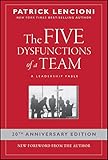
Through a business fable, Lencioni identifies the five core dysfunctions that prevent teams from achieving their potential and offers a practical framework for addressing them.
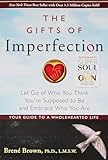
Brené Brown's guide to wholehearted living — letting go of who we think we should be and embracing who we actually are, with ten guideposts for cultivating authenticity, gratitude, and joy.
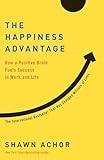
Harvard researcher Shawn Achor argues that happiness is not the result of success but its precursor, and presents seven practical principles for training your brain to capitalize on positivity.
Michelle Obama shares the tools and practices that helped her navigate uncertainty — from knitting and mentorship to the value of friendship and the art of staying in your own lane.
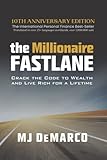
MJ DeMarco challenges the conventional wisdom of slow, patient wealth-building and argues for building scalable businesses that generate wealth rapidly.
An examination of self-sabotage — why we are our own biggest obstacle, how unconscious patterns undermine our conscious goals, and how to transform self-defeating behaviors into self-mastery.
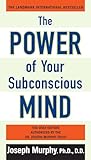
A practical guide to harnessing the subconscious mind for healing, prosperity, and happiness through visualization, affirmation, and the alignment of conscious and unconscious thought.
Gary Zukav argues that humanity is transitioning from a power-based consciousness to an alignment with the soul — and that understanding authentic power is the path to a genuinely meaningful life.
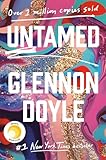
Glennon Doyle recounts how falling in love with soccer player Abby Wambach led her to question every choice she had made and learn to trust her own inner knowing.
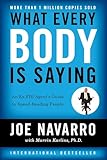
A former FBI counterintelligence agent shares his system for reading nonverbal communication, identifying deception, and understanding what people are really communicating.
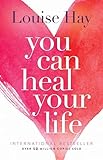
Louise Hay argues that our thoughts create our experiences — and that by changing our thinking patterns, particularly through loving the self, we can transform every area of our lives.
Daniel Pink argues that the Conceptual Age is replacing the Information Age, and that right-brain directed abilities — design, empathy, play, story, symphony, and meaning — are becoming the new competitive advantage.
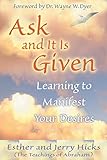
Esther and Jerry Hicks present the teachings of Abraham — a group of spiritual entities — on the law of attraction and how to align with what you desire.
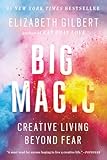
Elizabeth Gilbert argues for a life of creative curiosity over creative suffering, proposing a philosophy of making things for their own sake rather than for validation or survival.