Drawing on two decades of social science research and interviews with senior leaders, Brené Brown makes the case that courage — expressed through vulnerability, values clarity, trust, and learning to rise from failure — is the foundational skill of effective leadership.
Mel Robbins introduces a simple two-word mindset shift — 'let them' — that stops you from wasting energy trying to control what other people think, say, or do.
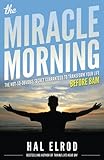
Hal Elrod presents a morning routine combining silence, affirmations, visualization, exercise, reading, and scribing — the SAVERS framework — as the foundation for transforming any area of life.
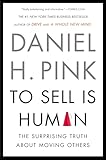
Daniel Pink argues that we are all in sales now — persuading, convincing, and moving others is a universal human activity, not just a profession — and explains the new science behind doing it well.
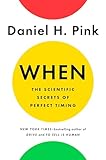
Daniel Pink synthesizes research from biology, economics, and psychology to explain when to make decisions, take breaks, and start projects for optimal performance.
Will Smith's memoir traces his journey from West Philadelphia to global superstardom while exploring the fears, failures, and family dynamics that shaped him.
After a painful divorce, Elizabeth Gilbert spends a year travelling — eating in Italy, praying in India, and finding love in Bali — in this memoir that became one of the bestselling travel narratives of the century.
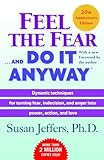
Susan Jeffers argues that fear never goes away, but that acting in spite of it is a learnable skill that builds confidence and opens life to new possibilities.
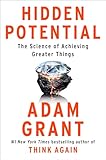
Adam Grant challenges the talent-worship culture and argues that character skills, not innate ability, are the true engines of extraordinary achievement.
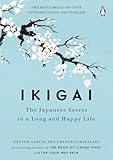
An exploration of the Japanese concept of ikigai — your reason for being, the thing that makes you want to get out of bed in the morning — through the lens of Japan's longest-lived communities.
Keith Ferrazzi argues that professional success depends on the quality of your relationships and provides a system for building genuine connections rather than transactional networks.
Grant Cardone argues that the only way to achieve extraordinary results is to set targets 10 times higher than you think you need and take 10 times more action than seems necessary.
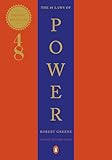
A distillation of three thousand years of history's most effective strategies for acquiring and maintaining power, drawn from historical figures ranging from Sun Tzu to Catherine the Great.
Mel Robbins reveals the five-second rule: when you feel an impulse to act on a goal, count backwards from five and move before your brain has time to stop you.
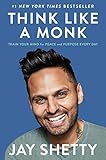
Drawing on three years spent as a monk in India and a decade synthesizing ancient Vedic wisdom with modern psychology, Jay Shetty offers a practical framework for training the mind for clarity, purpose, and inner peace.
The condensed companion to MONEY: Master the Game — Robbins distils the core investing principles from interviews with fifty financial luminaries into a shorter, more actionable format. Covers market corrections, the psychology of fear, low-cost index funds, and the four core principles of investing in all seasons.
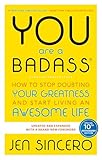
Self-made success coach Jen Sincero delivers a no-nonsense, profanity-laced guide to identifying the self-limiting beliefs that keep you broke, bored, and unhappy, and replacing them with confidence and action.
Robbins's encyclopedic finance book — based on interviews with fifty of the world's greatest investors (Ray Dalio, Jack Bogle, Warren Buffett, Carl Icahn, Paul Tudor Jones). Covers the investor game, the myths of Wall Street, strategies for accumulation, protection of capital, and Ray Dalio's all-weather portfolio.
Tim Ferriss applies his 80/20 optimisation philosophy to the human body — covering fat loss, muscle gain, sleep, sex, and extreme athletic performance with self-experimental data.
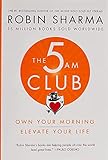
Robin Sharma presents the 20/20/20 formula for the first hour of the day — 20 minutes of intense exercise, 20 minutes of reflection and planning, 20 minutes of learning — through a motivational story of a billionaire mentor.
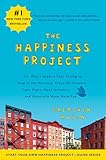
Gretchen Rubin spends a year methodically testing happiness-boosting strategies in twelve monthly themes — from decluttering to friendship to spirituality — and reporting what actually works.
High-powered lawyer Julian Mantle suffers a massive heart attack in the middle of a courtroom and, shaken to his core, sells everything — including his beloved Ferrari — to study with the Sages of Sivana in the Himalayas. He returns transformed and shares seven virtues for a more purposeful, joyful, and fulfilling life.