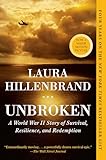
The true story of Louis Zamperini — Olympic runner turned World War II bombardier who survived 47 days adrift in the Pacific and then two years in Japanese POW camps — and his eventual path to redemption through faith.
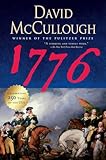
David McCullough narrates the military history of 1776 — the year of American independence — through the campaigns, retreats, and nearly disastrous reverses that shaped the Revolutionary War's decisive year.
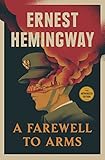
American ambulance driver Frederic Henry falls in love with English nurse Catherine Barkley against the backdrop of the Italian front in World War I — a love story that the war will not leave intact.
Barack Obama's presidential memoir covers his early life, 2008 campaign, and first term, examining both the machinery of American democracy and the personal cost of holding its highest office.
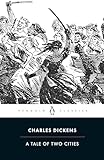
A story of love, sacrifice, and revolution set against the backdrop of the French Revolution, moving between London and Paris on the eve of the Terror.
Written as a letter to his teenage son, Ta-Nehisi Coates examines the history and present reality of anti-Black racism in America — its origins in the destruction of Black bodies, its persistence through white supremacy — with unsparing intellectual force.
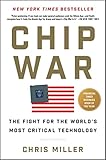
Economic historian Chris Miller traces the history of the semiconductor industry from the invention of the transistor to the US-China technology war, showing how computer chips became the defining resource of the twenty-first century.
Ron Chernow's monumental biography of Ulysses S. Grant reclaims one of American history's most misunderstood figures — the general who won the Civil War and the president who fought to protect Black Americans during Reconstruction.
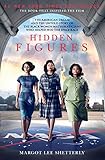
The true story of the Black female mathematicians who served as 'human computers' at NASA during the Space Race — women whose calculations helped launch America into space while they navigated the segregated South.
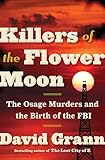
In 1920s Oklahoma, members of the Osage Nation were being systematically murdered for their oil wealth in a conspiracy that eventually drew in J. Edgar Hoover's nascent FBI.
The intertwined stories of the 1893 Chicago World's Fair — one of the most ambitious construction projects in American history — and the serial killer H.H. Holmes, who used the fair's crowds as cover for his murders.
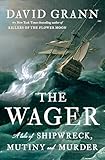
The true story of the 1741 shipwreck of HMS Wager off the coast of Patagonia, the murderous castaways who survived, and the competing accounts of what happened that constituted a kind of 18th-century trial.
A comprehensive, revisionist history of ancient Rome from its murky origins to the extension of citizenship across the empire, written with the authority of Britain's greatest living classicist.
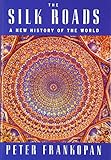
A radical reorientation of world history centered on the Silk Roads — the trade routes connecting East and West — arguing that Asia, the Middle East, and Central Asia have been the world's true centers for most of recorded history.
Adapted from her viral TEDx talk, Chimamanda Ngozi Adichie makes a passionate and personal case for feminism rooted in the realities of both African and Western experience.
Two economists argue that the difference between rich and poor countries is not geography, culture, or ignorance, but the presence of inclusive versus extractive political and economic institutions.
An investigation into the U.S. federal government's most consequential departments and what happens when the incoming administration fails to prepare for managing them.
The story of a group of idealistic American airmen in the 1930s who dreamed precision bombing could make war more humane — and why their dream collided with catastrophic reality over Tokyo.
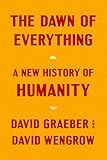
An anarchist anthropologist and an archaeologist argue that conventional narratives of social evolution — from bands to tribes to states — are wrong, and that human history shows far more political experimentation and freedom than we have assumed.
Naomi Klein's investigation into how disaster capitalism exploits crises to implement radical free-market policies that could not survive democratic scrutiny in normal times.
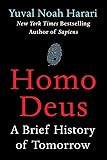
A sweeping vision of humanity's future as Homo sapiens pursues the ancient goals of immortality, bliss, and divinity — and what we risk losing in the process.
David Grann investigates the disappearance of British explorer Percy Fawcett, who vanished in the Amazon in 1925 while searching for an ancient lost civilization he called Z.