Bill Gates Reading List: Every Book He Has Recommended (2026)
Bill Gates publishes reading recommendations twice a year on GatesNotes. This is the definitive guide to every book Gates has recommended — spanning science, history, business, and fiction.
By Marcus Webb
Bill Gates has been publishing book recommendations since 2010. Twice a year — at summer and the holidays — he releases a curated list on his blog, GatesNotes, accompanied by thoughtful mini-essays explaining exactly what he found valuable and why.
His reading spans an extraordinary range: epidemiology, climate science, African history, global health, military biography, literary fiction. Gates reads everything. And unlike many public figures who casually drop book titles, his recommendations come with the kind of specificity that only someone who actually finished the book — and thought hard about it — can provide.
This page collects his most significant and consistently recommended titles, organised by theme.
Bill Gates’s Top Picks at a Glance
| Book | Author | Category |
|---|---|---|
| The Better Angels of Our Nature | Steven Pinker | History |
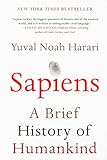
| Sapiens | Yuval Noah Harari | History |
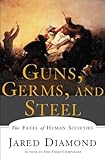
| Guns, Germs, and Steel | Jared Diamond | History |
| The Warmth of Other Suns | Isabel Wilkerson | History |
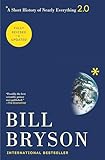
| A Short History of Nearly Everything | Bill Bryson | Science |
| The Selfish Gene | Richard Dawkins | Science |
| Astrophysics for People in a Hurry | Neil deGrasse Tyson | Science |
| The Sixth Extinction | Elizabeth Kolbert | Science |
| Factfulness | Hans Rosling | Science |
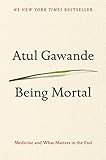
| Being Mortal | Atul Gawande | Health |
| The Emperor of All Maladies | Siddhartha Mukherjee | Health |
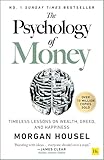
| The Psychology of Money | Morgan Housel | Economics |
| Thinking, Fast and Slow | Daniel Kahneman | Psychology |
| Misbehaving | Richard Thaler | Economics |
| Business Adventures | John Brooks | Business |
| The Rosie Project | Graeme Simsion | Fiction |
| The Road | Cormac McCarthy | Fiction |
| The Great Gatsby | F. Scott Fitzgerald | Fiction |
| Thinking in Systems | Donella Meadows | Systems |
| Enlightenment Now | Steven Pinker | History |
Science and the Natural World
A Short History of Nearly Everything by Bill Bryson
Gates has praised this book as the single best introduction to science for non-scientists he has encountered. Bryson traces the history of scientific discovery across physics, chemistry, geology, and biology with wit and clarity that makes even quantum mechanics feel accessible. Gates has recommended it to his children and referenced it in multiple GatesNotes posts over the years.
The Selfish Gene by Richard Dawkins
One of Gates’s most-cited books, The Selfish Gene reframes evolution from the perspective of genes rather than organisms. Gates describes it as one of those books that permanently restructures how you see the world. He first read it in the 1970s and has returned to it repeatedly. The concept of the “meme” — originally coined here — alone makes it worth reading.
Astrophysics for People in a Hurry by Neil deGrasse Tyson
Gates recommended this as a holiday book pick specifically because it delivers genuine scientific understanding in under two hours of reading. Tyson covers dark matter, dark energy, the Big Bang, and the laws of physics with an economy that most science communicators fail to achieve.
Factfulness by Hans Rosling
Gates has called Factfulness one of the most important books he has ever read, and he has distributed copies to new Microsoft employees. Rosling’s argument — backed by extensive data — is that the world is systematically better than educated people in rich countries believe, and that our negativity bias produces dangerous policy errors. Gates has said Rosling changed how he thinks about global health progress and what metrics actually matter.
History and Society
The Better Angels of Our Nature by Steven Pinker
Gates has called this the most important book he has ever read. Pinker’s exhaustive, data-driven argument that violence — in every measurable form, from war to murder to child abuse — has declined over centuries runs against most people’s intuition and most news coverage. Gates found it transformative for how he thinks about philanthropy and global development: if progress is real and measurable, then knowing what drives it matters enormously. He has recommended it in multiple GatesNotes posts and given it to colleagues, employees, and world leaders.
Sapiens: A Brief History of Humankind by Yuval Noah Harari
One of Gates’s most enthusiastically promoted books. He described Sapiens as one of the most important books he has read in a decade. Harari’s sweeping account of human history — from the cognitive revolution through the agricultural and industrial ages — asks uncomfortable questions about progress that most history books avoid.
Guns, Germs, and Steel by Jared Diamond
Gates has referenced Diamond’s thesis — that geography rather than race or culture explains which civilisations dominated others — in multiple posts on global development and inequality. Guns, Germs, and Steel gave Gates a framework he has used repeatedly when thinking about why some countries are rich and others poor.
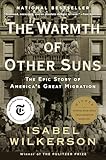
The Warmth of Other Suns by Isabel Wilkerson
Gates chose this as a rare foray into American social history in his reading recommendations. Wilkerson’s chronicle of the Great Migration — six million Black Americans who moved from the South between 1915 and 1970 — is told through three individual stories that Gates found more illuminating than any policy paper.
Business and Economics
The Psychology of Money by Morgan Housel
Gates picked The Psychology of Money shortly after publication and described it as essential reading for anyone who wants to understand why people make the financial decisions they do. Housel’s core argument — that financial success is more about behaviour than intellect — resonated with Gates’s own views on the irrational side of human decision-making.
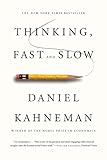
Thinking, Fast and Slow by Daniel Kahneman
Gates has cited Kahneman’s two-system model of cognition across many interviews and posts. The distinction between fast, intuitive thinking and slow, deliberate reasoning underpins everything from his views on philanthropy to how he runs meetings. This is one of the books he most consistently recommends to people starting careers in any field.
Misbehaving: The Making of Behavioral Economics by Richard Thaler
Gates recommended this alongside Thinking, Fast and Slow as a paired read. Thaler’s account of how he and colleagues built the field of behavioural economics — fighting mainstream economists who assumed humans were rational — is both intellectually serious and genuinely funny.
Business Adventures by John Brooks
Warren Buffett gave Gates this collection of New Yorker business stories in 1991, and Gates has repeatedly called it his favourite business book. Written in the 1960s, Brooks’s profiles of corporate crises, market collapses, and business personalities read as though the underlying dynamics of money and human behaviour have not changed at all — because they haven’t. Gates has said the chapter on Ford’s Edsel disaster is still the best account of product failure he has encountered.
Health and Medicine
Being Mortal by Atul Gawande
Gates has called Being Mortal one of the most important books he has ever read. Gawande’s examination of how modern medicine handles aging and death — and how poorly it does so — led Gates to change how he thought about his own philanthropic work in healthcare. He has gifted it widely and promoted it in multiple annual reading lists.
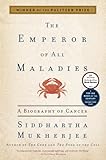
The Emperor of All Maladies by Siddhartha Mukherjee
Gates described this biography of cancer as one of the most ambitious books he has encountered: the story of humanity’s centuries-long struggle against a disease that in some sense is caused by life itself. He praised Mukherjee’s ability to make complex oncology accessible without simplifying the science.
Fiction
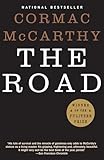
The Road by Cormac McCarthy
Gates’s fiction picks are rare, which makes this one significant. He described The Road as the kind of book that stays with you for years — a post-apocalyptic father-son story that is, at its core, about what we would sacrifice to protect the people we love. Gates read it during a period when he was thinking about existential risk and found its bleakness oddly clarifying.
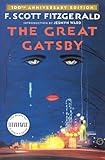
The Great Gatsby by F. Scott Fitzgerald
Gates has returned to Fitzgerald repeatedly in his reading recommendations. The Great Gatsby is the book he most frequently names when asked about fiction he has re-read — he finds Fitzgerald’s portrait of American wealth and its discontents more relevant with each re-read.
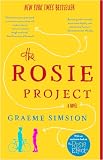
The Rosie Project by Graeme Simsion
Gates recommended The Rosie Project as one of his lighter reads and was surprised by how much he enjoyed it — a rare fiction recommendation from a reader who usually gravitates toward dense non-fiction. Simsion’s novel follows a genetics professor with apparent autism-spectrum traits who devises a structured questionnaire to find a wife, and the comic misadventures that follow. Gates praised it as an unexpectedly moving story about connection and self-knowledge beneath the comedy.
Climate and the Environment
How to Avoid a Climate Disaster by Bill Gates
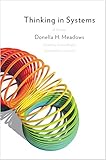
While Gates’s own book sits outside a reading list post in the obvious sense, it is worth noting that the books he read while researching it — including Thinking in Systems by Donella Meadows — became some of his most enthusiastic recommendations. He spent several years immersed in energy and climate literature before writing it.
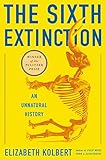
The Sixth Extinction by Elizabeth Kolbert
Gates called this “one of the most informative books I’ve read on the environment.” Kolbert traces humanity’s role in the current mass extinction event — visiting disappearing species worldwide — with rigour and controlled alarm. Gates has referenced it in multiple climate-related posts.
What Connects Gates’s Picks
Several patterns emerge across his reading over fifteen years:
Systems thinking. Gates consistently gravitates toward books that explain how complex systems work — whether economic systems, biological systems, or political ones. He is less interested in individual stories than in the mechanisms underneath them.
Evidence over ideology. Gates’s reading is empirical. He favours books backed by data and resists those built primarily on argument. This is why he gravitates toward scientists (Dawkins, Gawande, Diamond) as often as storytellers.
Long-term perspective. Almost every Gates recommendation operates on a timeline longer than a news cycle. Sapiens covers 70,000 years. Guns, Germs, and Steel covers centuries. The Warmth of Other Suns covers decades. Gates is training himself to think generationally.
Frequently Asked Questions
How often does Bill Gates publish reading recommendations?
Gates typically publishes two lists per year: a summer reading list in June or July, and a holiday reading list in November or December. He posts them on GatesNotes along with short essays on each book. Individual book reviews appear throughout the year on GatesNotes and his social media.
What is Bill Gates’s favourite book?
Gates has repeatedly named The Better Angels of Our Nature by Steven Pinker as the most important book he has ever read. He has also consistently highlighted Being Mortal by Atul Gawande and Business Adventures by John Brooks as personal favourites — the latter given to him by Warren Buffett in 1991.
Does Bill Gates read fiction?
Yes, but less frequently than non-fiction. He tends to pick a single novel per list and reads it with clear intent — fiction picks are usually thematically connected to something he is thinking about. The Road by Cormac McCarthy and The Great Gatsby are among his most discussed fiction picks.
How many books does Bill Gates read per year?
Gates has said he reads approximately 50 books per year — roughly one per week. He takes notes in the margins and writes summaries of what he has read. He has described reading as his primary method for learning new fields — he read dozens of books on energy and climate before writing How to Avoid a Climate Disaster.
Where can I find Bill Gates’s reading list?
Gates publishes his reading recommendations at GatesNotes (gatesnotes.com). He also posts on social media platforms. His summer and holiday lists each year are the most anticipated, but he reviews individual books throughout the year on the site.
What does Bill Gates read to understand climate change?
Gates has been specific about his climate reading: The Sixth Extinction by Elizabeth Kolbert, Thinking in Systems by Donella Meadows, and his own research process for How to Avoid a Climate Disaster involved dozens of books on energy systems, agriculture, and manufacturing. He has consistently recommended Kolbert’s work as the most readable introduction to the scale of the problem.
What is the most unusual book Bill Gates has recommended?
Business Adventures by John Brooks stands out — a collection of New Yorker business stories from the 1960s that Gates received from Warren Buffett and has called his favourite business book. The book is out of print and extremely difficult to find, which makes Gates’s enthusiasm for it all the more notable. He has said the chapter on Ford’s Edsel disaster remains the best account of a product failure he has encountered, decades after it was written.
Related Reading Lists
Gates’s list is the most science-and-philanthropy-focused of the major tech reading lists. For comparison:
- Elon Musk Favourite Books — physics, science fiction, and civilisational timescales; the most unusual reading list of any tech founder
- Barack Obama Reading List — the widest literary range; heavy on fiction, history, and social science
- Mark Zuckerberg Reading List — political economy and institutions; the Year of Books challenge
- Tim Ferriss Book Recommendations — Stoic philosophy, cognitive science, and performance; sourced from 700+ podcast interviews
Affiliate disclosure: Links to Amazon on this page are affiliate links. We earn a small commission at no extra cost to you. This does not influence our editorial recommendations.
Frequently Asked Questions
What books does Bill Gates recommend most consistently?
The books Bill Gates has recommended most consistently are The Better Angels of Our Nature by Steven Pinker, Sapiens by Yuval Noah Harari, and Business Adventures by John Brooks. He has called The Better Angels of Our Nature the most important book he has ever read.
Where does Bill Gates share his reading recommendations?
Bill Gates shares his reading recommendations on his blog GatesNotes at gatesnotes.com. He publishes summer and end-of-year reading lists twice a year, along with individual book reviews throughout the year. He is also active on social media where he occasionally shares reading updates.
What types of books does Bill Gates read?
Bill Gates reads primarily non-fiction covering science, public health, economics, history, and business. He also reads fiction, though he tends to discuss non-fiction more publicly. He has a particular interest in books about global health, climate change, and the long-term trajectory of human progress.
What is Bill Gates's favourite book?
Bill Gates has described The Better Angels of Our Nature by Steven Pinker as the most important book he has ever read. He wrote a lengthy review praising its argument that violence has declined over human history. Business Adventures by John Brooks, which Warren Buffett gave to Gates in 1991, is the book Gates has cited most as a personal favourite.