A novelist travels to Jeju Island in the middle of a snowstorm to care for her friend's injured bird — and confronts the buried history of the Jeju April Third Incident, the 1948 massacre in which tens of thousands of Koreans were killed.
Long-Term Capital Management was a hedge fund run by Nobel laureates and bond-trading legends that nearly collapsed the global financial system in 1998. Lowenstein reconstructs the fund's rise — based on sophisticated arbitrage models — and its catastrophic fall when Russia defaulted and the models stopped working.
Dave Eggers, twenty-one, loses both parents to cancer within weeks of each other and becomes the primary guardian of his eight-year-old brother — a memoir that is also a meditation on memoirs and on the absurdity of claiming to capture grief in prose.
Peter Handke's mother killed herself in 1971 at the age of 51. He wrote this account six weeks later: an attempt to write a biography of someone who has been erased from history by her ordinariness, and a meditation on whether literary language can represent a real person without falsifying her. One of the great grief memoirs.
Peter Mayle and his wife abandon advertising careers in England to restore a farmhouse in the Luberon region of Provence — and spend a year navigating unpredictable tradesmen, extraordinary markets, and a way of life entirely organised around food.
Thomas Sutpen arrives in Jefferson, Mississippi in 1833 with a hundred slaves and a design: to build a dynasty. By the time Quentin Compson and his Harvard roommate Shreve piece the story together in 1910, the design has produced only catastrophe. Faulkner's most ambitious novel, told through multiple narrators across multiple decades.
The history of probability and risk management — from Pascal and Fermat's correspondence on gambling through the development of modern portfolio theory, the Black-Scholes formula, and derivatives. Bernstein argues that the mastery of risk is the defining achievement of the modern world.
Young Varguitas, an eighteen-year-old aspiring writer working at a Lima radio station, falls in love with his Aunt Julia (his uncle's ex-wife, fifteen years older). Meanwhile, the brilliant and possibly mad scriptwriter Pedro Camacho is turning out radio soap operas at an impossible rate—and slowly losing his mind. Vargas Llosa's most autobiographical and most comic novel.
Rebus investigates a murder that connects to the unsolved Bible John killings of the 1960s while simultaneously investigating the oil industry in Aberdeen and a copycat killer. The book that won the Gold Dagger and established Rebus as a major series.
Samantha Heather Mackey is an outsider in her MFA fiction writing program — until the popular clique called the Bunnies invites her in, and she discovers their workshop has a terrible, blood-soaked secret.
The first of Kate Atkinson's Jackson Brodie novels. Private investigator Jackson Brodie takes on three apparently unconnected cold cases — a missing child, a murdered young woman, an act of family violence — in a literary mystery that braids grief, coincidence, and dark comedy.
Paul Theroux, one of the great travel writers in the English language, travels overland from Cairo to Cape Town — by bus, truck, ferry, and train — through some of the most troubled and beautiful countries in Africa, forty years after teaching there as a Peace Corps volunteer.
Kenzie and Gennaro are hired to protect a psychologist who has received death threats from a patient. As they investigate, they are drawn into a twenty-year pattern of murders in Dorchester and Charlestown — and into personal danger that will alter the series permanently.
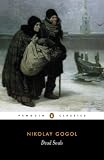
Chichikov travels through provincial Russia purchasing 'dead souls' — serfs who have died since the last census but are still recorded on landowners' rolls, and can therefore be used as collateral for loans. The scheme is comic, opaque, and darkly satirical. Gogol described the novel as the first part of a Russian Divine Comedy.
When the Yoruba king dies, his horseman Elesin is required by tradition to follow him in ritual suicide. The British colonial officer—genuinely believing he is saving a life—intervenes. The intervention destroys more than it saves. Soyinka's masterwork, based on events that occurred in Oyo, Nigeria in 1946.
Miles Roby manages the Empire Grill in Empire Falls, Maine — a dying mill town owned entirely by the widow Francine Whiting. He has waited his whole life for things to resolve themselves. His marriage is failing, his teenage daughter is struggling, and the town is slowly emptying. Russo's Pulitzer Prize winner.
Arkady brings his friend Bazarov home to his father's estate. Bazarov is a nihilist — he believes in nothing except empirical science and rejects all authority, sentiment, and tradition. His conflict with the older generation, his unexpected passion for Madame Odintsova, and his death define the Russian novel's engagement with the question of what to believe.
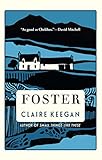
A young girl is sent to spend the summer with relatives in rural County Wexford, Ireland, in the 1970s, and discovers for the first time what it means to be cared for unconditionally.
Nine stories about love's permutations—the love that turns into hate, the love that survives betrayal, the love that arrives too late. The title story begins with a prank that accidentally produces love; others explore what happens when desire outlives its object or arrives in a person who cannot recognize it.
A self-help book organised around Marcel Proust's In Search of Lost Time — using Proust's life and work to address questions about how to be happy, how to pay attention, and how to suffer productively.
17th-century Iceland under Danish rule. Jón Hreggviðsson, a peasant wrongly accused of murder, fights his case through the Danish courts for decades. His story becomes entangled with that of an Icelandic scholar who believes in Iceland's spirit and a beautiful woman who survives everything. Laxness's historical epic about Icelandic identity under colonial rule.
Eleven linked short stories following a nameless, druggy narrator through the American Midwest — car crashes, hospitals, petty crime, heroin, grace and violence in equal measure. Johnson's collection is one of the most acclaimed works of short fiction in American literature.
MIT physicist Max Tegmark explores the landscape of possible futures as artificial intelligence approaches and then surpasses human-level intelligence — and what choices humanity must make now.
Disclosure: Editors Reads is a participant in the Amazon Services LLC Associates Program. When you click an Amazon link and make a purchase, we may earn a commission at no additional cost to you. This helps fund our independent editorial team.
We use cookies to understand how visitors use our site (Google Analytics). No data is collected until you accept.
Privacy Policy