Robert Greene examines the lives of history's greatest masters — Leonardo da Vinci, Charles Darwin, Mozart, Bobby Fischer — to identify the common path toward genuine mastery of any field.
A collection of 23 short essays on the timeless behaviors and patterns that drive human decision-making — the things that never change even as the world changes around them.
A dialogue between a philosopher and a young man across five nights explores Alfred Adler's psychology of freedom — the idea that unhappiness is a choice, trauma is a story, and happiness requires the courage to be disliked.
Robert Greene analyzes eighteen fundamental aspects of human psychology — from narcissism and envy to grandiosity and conformism — and shows how understanding them enables better navigation of people and situations.
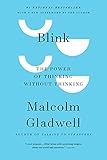
An exploration of the power of intuitive snap judgments — when they are reliable, when they fail, and how thin-slicing works in experts and everyday people.
Research professor Brené Brown argues that vulnerability — the willingness to be seen in all our uncertainty and imperfection — is not weakness but the foundation of courage, connection, and creativity.
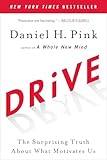
Daniel Pink argues that the science of human motivation has been ignored by business, which relies on carrot-and-stick incentives that actually undermine performance for complex work.
A profoundly isolated young woman in Glasgow navigates her rigidly structured life while concealing a devastating past and slowly, almost accidentally, discovering what connection feels like.
A practical guide to eliminating anxiety and worry through tested principles drawn from thousands of case studies, historical examples, and Carnegie's own experience.
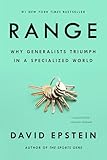
David Epstein argues that in a complex world, generalists who develop broad knowledge and late specialization often outperform narrow specialists — challenging the prevailing gospel of early specialization.
Social psychologist Jonathan Haidt documents the sudden rise in adolescent mental illness since 2012 and argues that smartphone-based childhood — specifically social media — is the primary driver.
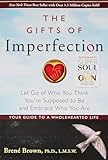
Brené Brown's guide to wholehearted living — letting go of who we think we should be and embracing who we actually are, with ten guideposts for cultivating authenticity, gratitude, and joy.
Harvard researcher Shawn Achor argues that happiness is not the result of success but its precursor, and presents seven practical principles for training your brain to capitalize on positivity.
An examination of self-sabotage — why we are our own biggest obstacle, how unconscious patterns undermine our conscious goals, and how to transform self-defeating behaviors into self-mastery.
A practical guide to harnessing the subconscious mind for healing, prosperity, and happiness through visualization, affirmation, and the alignment of conscious and unconscious thought.
An investigation into how ideas, trends, and social behaviours spread like epidemics — reaching a tipping point where a small change triggers a massive, cascading effect.
The story of Daniel Kahneman and Amos Tversky, the Israeli psychologists whose collaboration upended our understanding of human judgment and decision-making.
A former FBI counterintelligence agent shares his system for reading nonverbal communication, identifying deception, and understanding what people are really communicating.
Daniel Pink argues that the Conceptual Age is replacing the Information Age, and that right-brain directed abilities — design, empathy, play, story, symphony, and meaning — are becoming the new competitive advantage.
Adam Grant challenges the assumption that success requires self-promotion and strategic relationships, showing that the most successful people are often those who focus on giving rather than getting.
Organizational psychologist Adam Grant examines how individuals champion new ideas, overcome doubt and fear, and drive change in organizations and society.