Bertie Wooster is dispatched to Totleigh Towers, home of the terrifying Roderick Spode and the magistrate Sir Watkyn Bassett, to steal a silver cow creamer and assist various friends with their tangled romantic lives. Only Jeeves can navigate the catastrophe that follows.
Montaigne retired to his tower in 1571 and spent the next twenty years writing essays — a form he essentially invented — on subjects ranging from cannibals to friendship, cruelty to experience. The subject of every essay, regardless of its nominal topic, is Montaigne himself: how he thinks, what he knows, what he doubts.
Billy Parham, sixteen, traps a pregnant wolf in New Mexico and decides to return her to Mexico — three journeys across the border over a decade, each one costing more than the last.
Based on the true diary of Martha Ballard, this is the story of a colonial midwife in 1789 Maine who investigates a murder — and challenges a justice system that cannot imagine women as witnesses to their own lives.
The definitive account of the Soviet camp system: Solzhenitsyn's three-volume, seven-part history and personal testimony of the Gulag, drawing on 227 survivor testimonies gathered in secret over fifteen years. This abridged edition (authorized by Solzhenitsyn himself) brings the essential text to under 600 pages. One of the most important books of the twentieth century.
James Gleick traces the history of information from African talking drums through Claude Shannon's information theory to the digital deluge of the modern age.
A sweeping history of the digital revolution — from Ada Lovelace and Charles Babbage through Alan Turing, Claude Shannon, William Shockley, and the personal computer pioneers — arguing that the most important innovations were always the product of collaboration, not lone genius.
Todd Hewitt is the last boy in Prentisstown — a colony world where a germ has made everyone's thoughts audible as constant Noise — until he discovers a pocket of silence in the swamp and finds Viola, the first girl he has ever seen, whose ship crashed nearby.
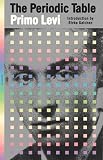
Primo Levi's luminous memoir in twenty-one chapters, each named for a chemical element. A chemist and Auschwitz survivor, Levi weaves the story of his life, his Piedmontese Jewish heritage, his craft, and his survival into a meditation on matter, humanity, and meaning.
Gracetown, Florida, 1950. Twelve-year-old Robert Stephens Jr. is sentenced to the Gracetown School for Boys — a Jim Crow-era reform school where boys disappear, ghosts walk the grounds, and the horrors of the institution are both living and dead.
Set in the 1960s Netherlands, The Safekeep follows Isabel, a fastidious, controlled woman whose carefully ordered life begins to unravel when her brother's girlfriend Isabelle arrives and starts disturbing both her possessions and her sense of self — forcing a confrontation with questions about how the Dutch acquired the objects in their homes after World War II.
Richard Dawkins's landmark restatement of Darwinian natural selection from the perspective of the gene, introducing the meme concept and transforming evolutionary biology.
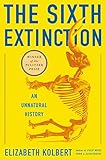
Elizabeth Kolbert reports from the front lines of the ongoing mass extinction event — the sixth in Earth's history, and the first caused by a single species.
Peter Matthiessen and zoologist George Schaller trek 250 miles into the Himalayas to study the bharal (Himalayan blue sheep) and their predator, the nearly mythical snow leopard — a physical journey that becomes a meditation on grief, Zen Buddhism, and the nature of consciousness.
Three timelines converge as Essun and her daughter Nassun race toward opposite ends — one to save humanity, one to end it — in the Hugo Award-winning conclusion to the Broken Earth trilogy.
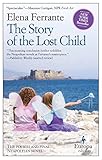
The final volume: Elena and Lila return to Naples in middle age, their friendship tested by a final, devastating loss as the neighbourhood that made them both begins to dissolve.
A mysterious widow arrives at the crumbling Wildfell Hall with her young son and refuses to explain her past — until her diary reveals she fled an abusive, alcoholic husband in an act of defiance that Victorian society considered scandalous and illegal.
Josef K. is arrested one morning without explanation, prosecuted by an opaque authority for an unnamed crime, and gradually consumed by a legal process he can never understand.
Charlotte Perkins Gilman's landmark 1892 short story. Confined to a room and forbidden to work or write as a 'rest cure' for nervous depression, a woman becomes obsessed with the room's hideous yellow wallpaper, descending into a madness that doubles as a devastating indictment of how women were treated.
In a peninsula resembling Renaissance Italy, a sorcerer-tyrant has erased the very name of the province of Tigana from human memory as an act of grief and vengeance — and the few surviving Tiganans must restore it before their culture is gone forever.
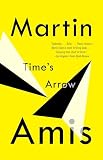
Martin Amis's most formally audacious novel tells the life of a Nazi doctor — including his work at Auschwitz — entirely in reverse chronological order, narrated by a consciousness that inhabits the doctor's body but does not share his knowledge, experiencing time running backwards.
Disclosure: Editors Reads is a participant in the Amazon Services LLC Associates Program. When you click an Amazon link and make a purchase, we may earn a commission at no additional cost to you. This helps fund our independent editorial team.
We use cookies to understand how visitors use our site (Google Analytics). No data is collected until you accept.
Privacy Policy